June 30, 2026
SUSTAIN supports NATHIST on SAREC Funded Webinars Network, SAREC Project
NATHIST secured SAREC funding to organize and deliver three webinars around the topic, Confluence of Knowledge Across Time : Workshop for Reciprocal Engagement with Living Knowledge Systems in Museums
About the Project
This project marks a fundamental shift in museum practice—moving away from traditional models of “collecting nature” toward a framework of “listening to nature.” Using the Mi’kmaw methodology of “Two-Eyed Seeing” (Etuaptmumk), we are working to position source communities as co-authors of museum knowledge rather than subjects of study. The Mi’kmaw concept, advocating for the simultaneous application of Indigenous/local knowledge holders’ perspectives alongside Western viewpoints supports co-created approaches to represent the natural world, exploring methodologies for the co-existence of multiple knowledge systems within museum display and outreach.
Workshop I (held June 30, 2026)
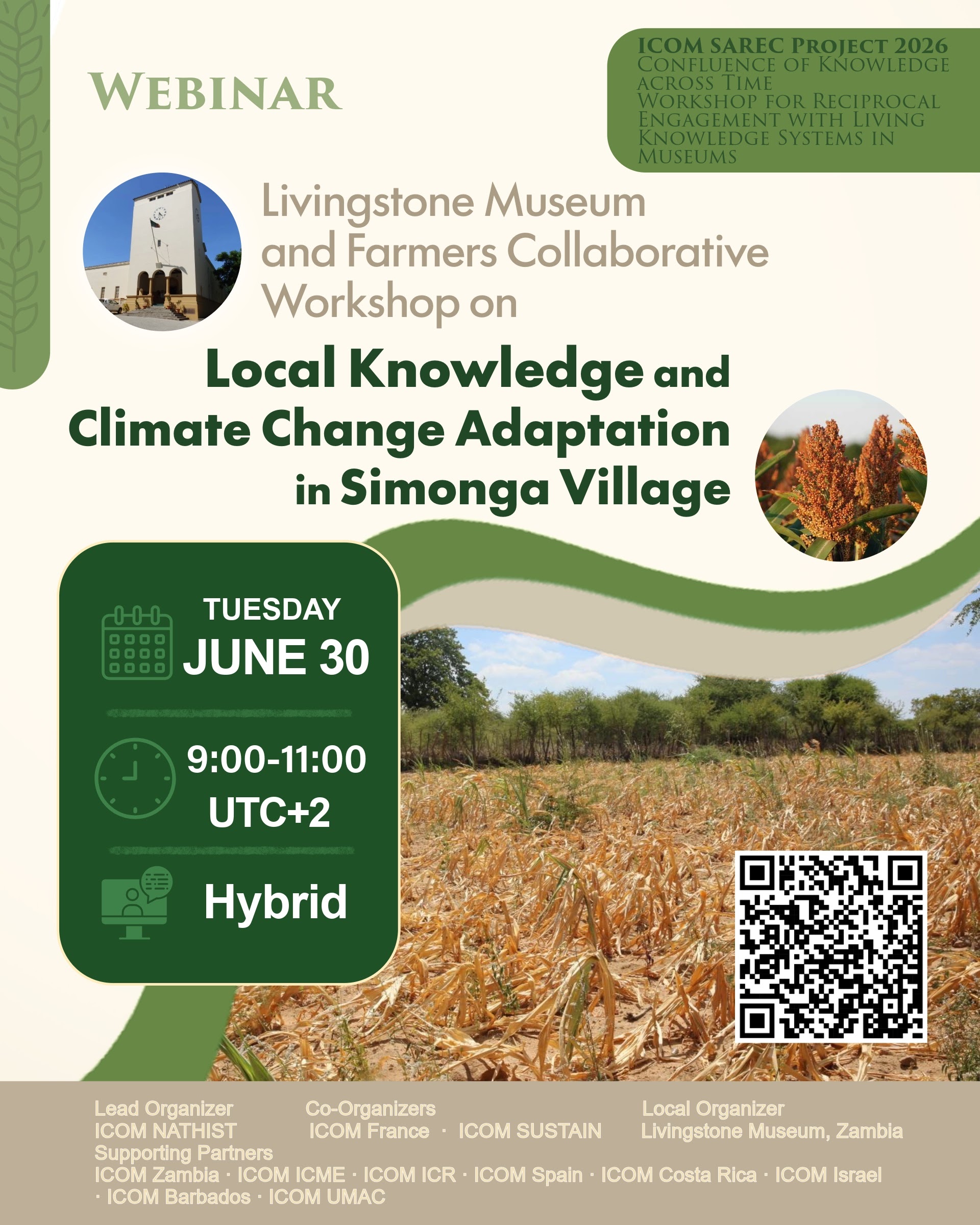
Local Knowledge and Climate Change Adaptation in Simonga Village featured a case-study from Zambia focused on documenting traditional agricultural knowledge as a nature-based solution for climate resilience in collaboration with the Livingstone Museum and Simonga Village Farmers Collaborative. The webinar introduced participants to smallholder farmers from Simonga in Livingstone, Zambia, who cultivate maize, groundnuts, beans, and other crops. Farmers shared their experiences of using local knowledge to adapt to climate change and cope with declining rainfall. Attendees heard from farmers about traditional knowledge that has been abandoned over time, practices that continue to support farming today, and challenges that farmers face in applying their knowledge. SUSTAIN board member Michela Rota, ICOM-Italy, provided commentary. You can watch the recorded webinar on YouTube at this link: https://youtu.be/Bi8cELjq2VE
Workshop 2 (11 July 2026)
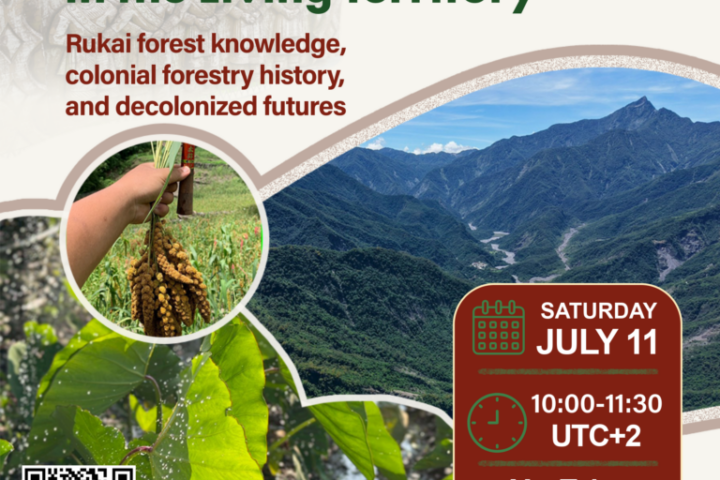
The Quiet Beasts in the Living Territory — Rukai Forest Knowledge, Colonial Forestry History, and Decolonial Futures
 Saturday, 11 July 2026 | 10:00–11:30 AM (UTC+2)
 Kabalelradhane Village Indigenous Cultural Health Station + YouTube Livestream
 Online registration: https://forms.gle/76GTK9bUkam3hbuQ6
 Program (UTC+2)
This series of webinars results from a partnership between numerous ICOM committees and local community stewards. The project is led by ICOM NATHIST and co-organized by ICOM France, ICOM SUSTAIN, and the Livingstone Museum (Zambia).
NATHIST appreciates the moral support and partnership of ICOM Zambia, ICOM ICME, ICOM ICR, ICOM Costa Rica, ICOM Spain, ICOM Israel, ICOM Barbados, and ICOM UMAC.
By documenting oral histories and co-creating metadata, the goal is to establish a replicable, ethical model for museums worldwide to empower the communities who steward our environment and cultural heritage.
Participate
We invite museum professionals, researchers, community workers, and students to join these vital conversations on decolonization, climate justice, and the future of natural history museums.